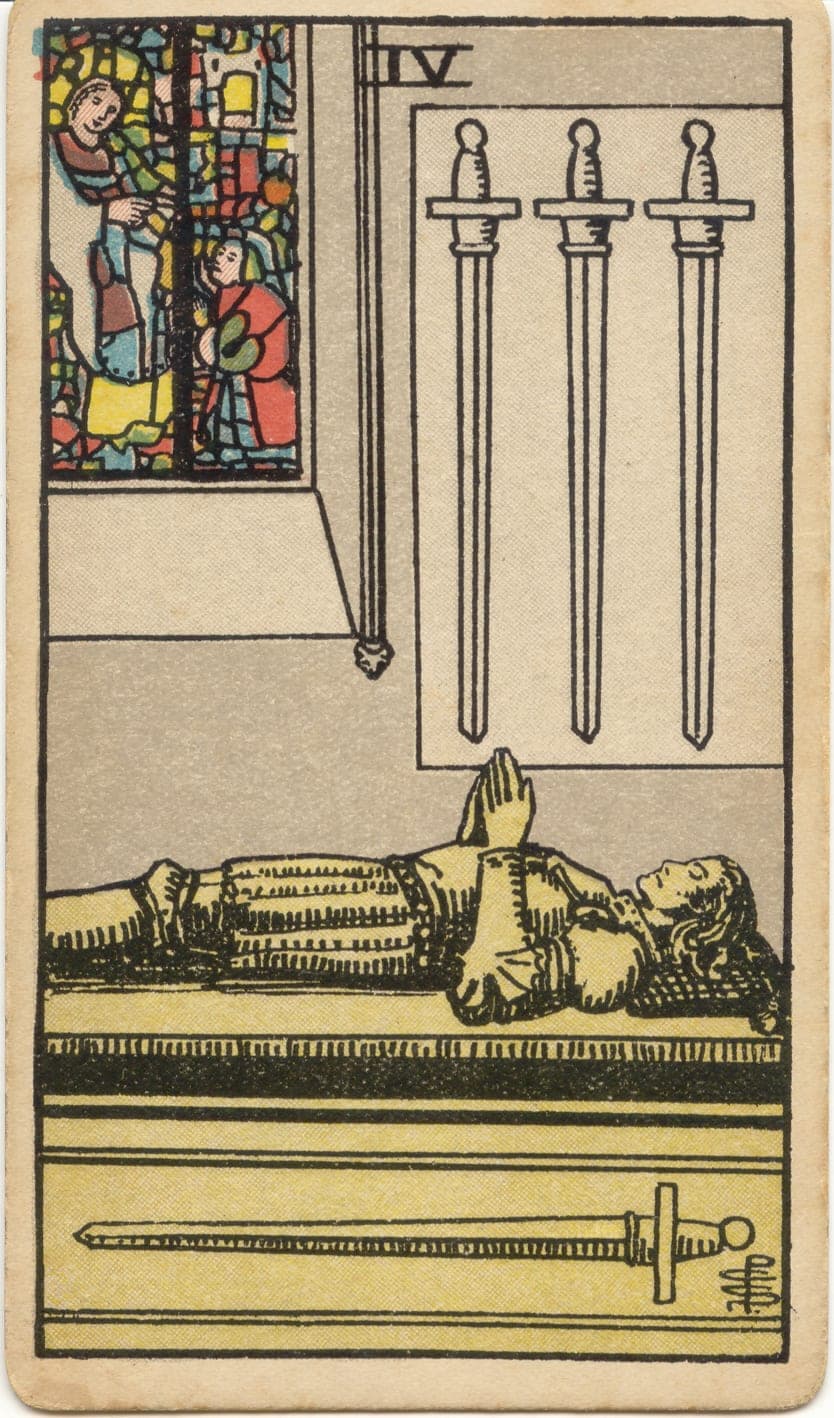
A knight's effigy lies in prayer on a tomb: a card of retreat, solitude and watchful rest.
Card art by Pamela Colman Smith (1909), public domain
Upright
Yes / No: Maybe
The Four of Swords speaks of retreat and solitude, a hermit's kind of rest, watchfulness, or time spent away from your usual place. Waite notes that the card's older links with the tomb gave rise to its picture, yet what the image shows is stillness and prayer. A pause, rather than a push, may be what helps now.
retreat
solitude
hermit-like rest
watchfulness
exile
Reversed
Yes / No: Maybe
Reversed, the card turns to the careful handling of affairs: sound management, circumspection, thrift and precaution. Waite also lists avarice and a testament, so caution here can tip into holding on too tightly. Where is the line between prudence and stinginess in how you look after what you have?
wise management
circumspection
thrift
precaution
stinginess
testament
Love & relationships
Upright, the Four of Swords suggests a pause in a connection: time apart, a need for rest or a quiet withdrawal while someone gathers their thoughts. Distance here may be about recovery rather than rejection. If you or the other person needs space, respecting it without reading too much into the silence can help.
Reversed, the Four of Swords points to caution in matters of the heart: careful, sensible handling of a bond that may tip into holding back too much. Feelings, time or warmth might be rationed out of a wish to stay safe. Where does prudence protect you, and where does it keep closeness at arm's length?
The image
The carved effigy of a knight lies full length on top of his tomb, hands joined in prayer. This is a memorial figure, not a living man, and the whole scene is calm and still.
Symbolism
The design, Waite says, grew out of the card's traditional links with the tomb and the coffin. The praying knight suggests vigilance kept even in rest, and the setting speaks of withdrawal from the busy world. In a suit Waite saw as rarely gentle, this card offers one of its quietest moments, with no conflict shown at all.
In a reading
Upright, the Four is a reminder that time alone, some distance or a period of quiet watchfulness may be what you need. Reversed, it looks at how carefully you are managing things, and whether that care has slipped into holding back too much.
The yes / no answer is our editorial reading of the card’s overall tone, not a prediction.
For self-reflection and personal insight. Not a prediction and not a substitute for professional medical, legal, financial or mental-health advice.