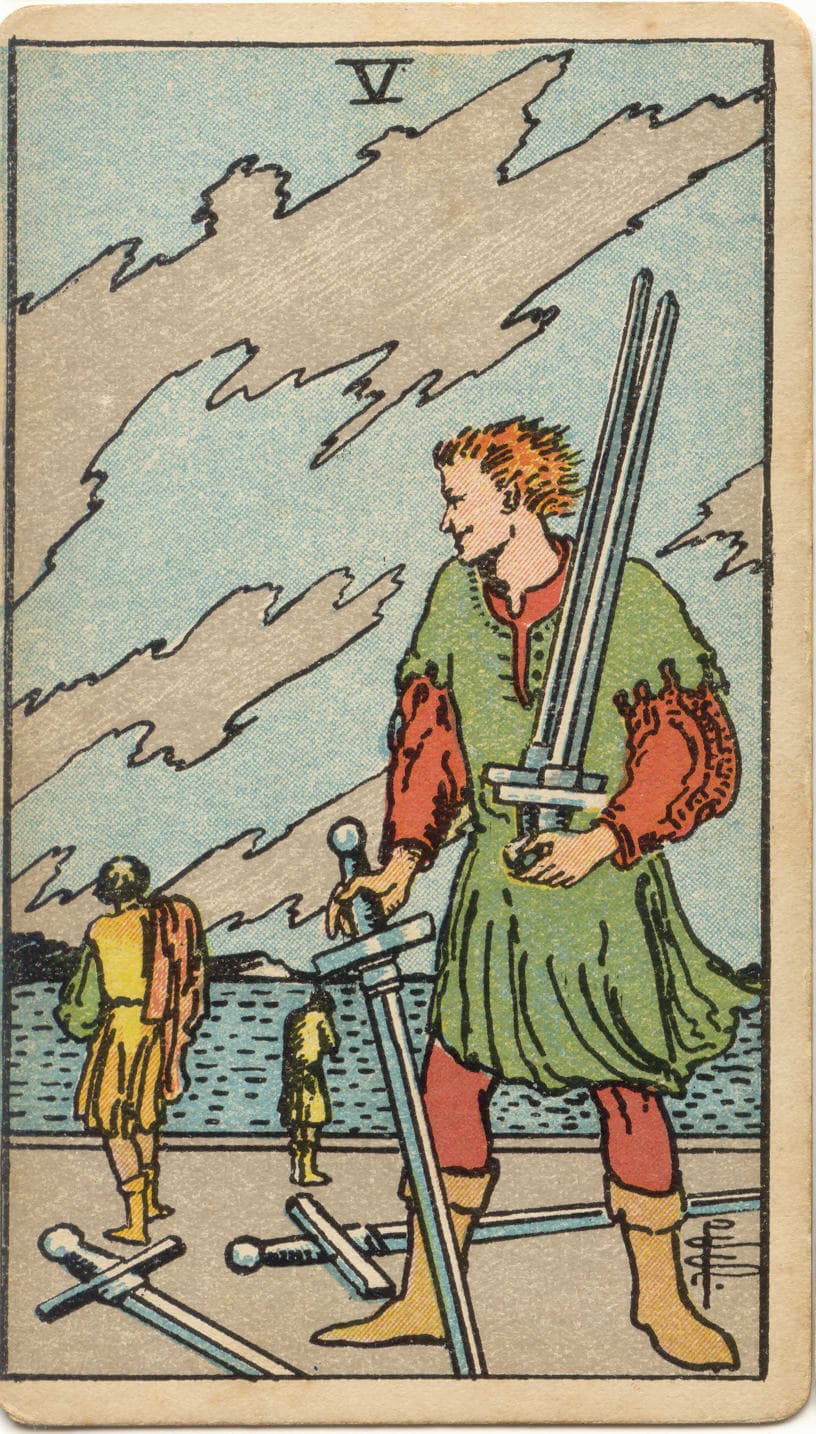
A scornful victor gathers swords as two figures walk away: a card of defeat, loss and dishonor.
Card art by Pamela Colman Smith (1909), public domain
Upright
Yes / No: No
The Five of Swords speaks of loss and the sting of defeat: degradation, destruction, something granted and then taken back, disgrace and dishonor. The scornful victor holds the ground while the others walk away downcast. How do you want to act after a conflict, whichever side of it you find yourself on?
degradation
destruction
revocation
disgrace
dishonor
loss
Reversed
Yes / No: No
Waite gives much the same meanings for the reversed card, adding burial and funeral rites. Read gently, this side can mark the formal close of a difficult chapter and the rituals people use to honor an ending. Consider how you might acknowledge what has finished, with care.
lingering loss
disgrace
endings
rites of farewell
laying to rest
Love & relationships
Upright, the Five of Swords describes the aftermath of a conflict between two people, where someone may have won the argument while the connection paid the price. Hurt pride, scorn or a sense of being diminished could linger on either side. What would fair, respectful conduct look like now, and can this bond offer it?
Reversed, the Five of Swords may show that a painful chapter in a relationship is reaching its close, with loss or disappointment still lingering. It may be a time for farewells, for acknowledging what has ended and laying old arguments to rest. How might you mark that ending with care, for yourself and for anyone else involved?
The image
A man with a disdainful look watches two dejected figures walk away, their swords left lying on the ground, while he shoulders two more and holds a third with its point toward the earth. He alone is left standing on the field.
Symbolism
Waite calls the standing man the master of the field, the one who now holds the ground. The dropped swords and the retreating figures show who has given up the contest, and the lowered blade suggests that the fight is over. This is a card about the aftermath of conflict, and about what is lost in it.
In a reading
In the upright position, the Five concerns a recent loss or a moment of humiliation, and how you want to carry it. Turned upside down, it points to endings that are ready to be acknowledged and laid to rest.
The yes / no answer is our editorial reading of the card’s overall tone, not a prediction.
For self-reflection and personal insight. Not a prediction and not a substitute for professional medical, legal, financial or mental-health advice.