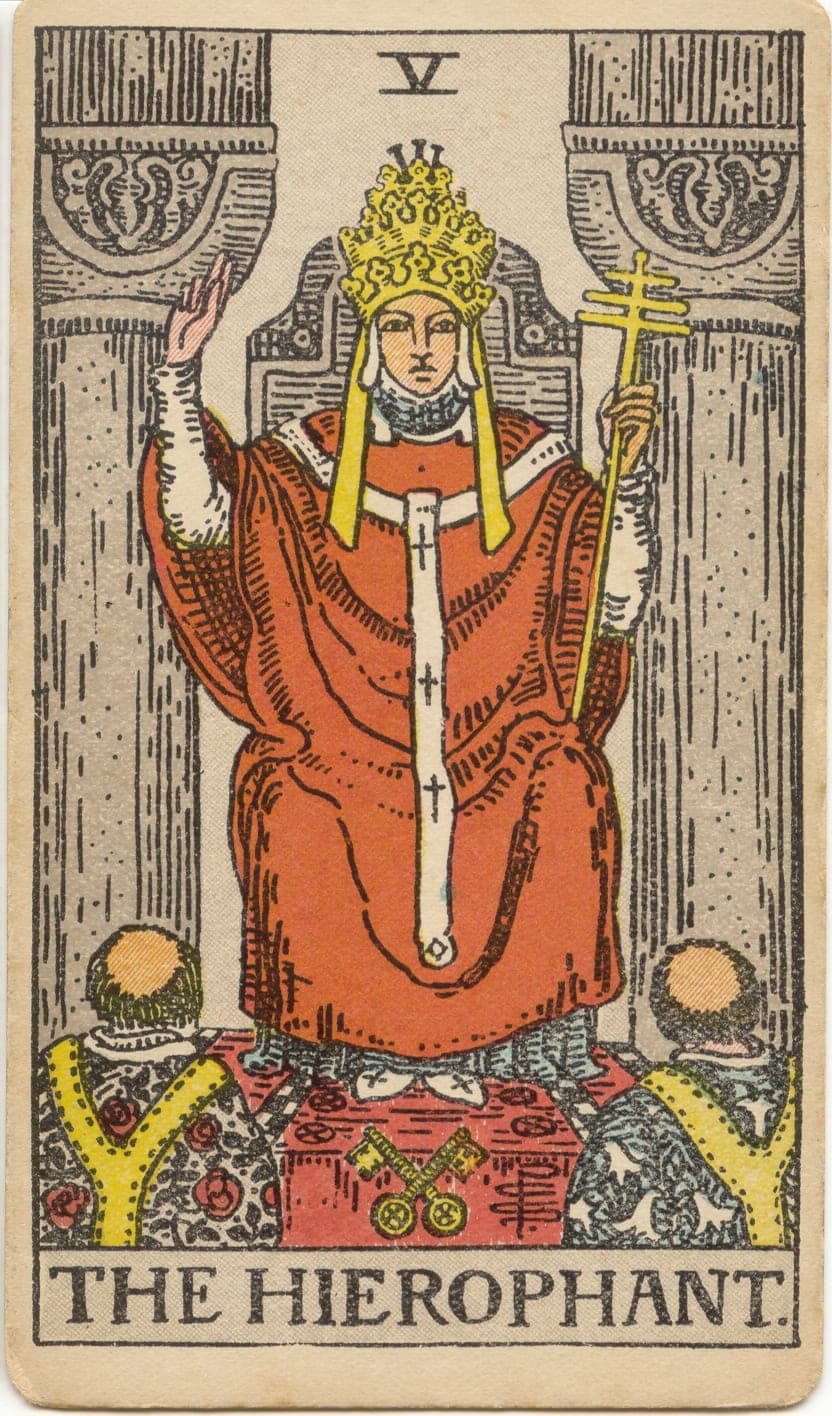
A triple-crowned figure sits before two kneeling ministers: Waite's card of outward tradition, alliances and the keys.
Card art by Pamela Colman Smith (1909), public domain
Upright
Yes / No: Maybe
Waite links the Hierophant with marriage and alliance, but also with captivity and servitude; another account he cites adds mercy, goodness and inspiration. The card can also stand for the person you turn to for guidance. Which bonds, commitments or traditions have you taken on, and do they feel like support or like constraint?
marriage
alliance
captivity
servitude
mercy and goodness
inspiration
Reversed
Yes / No: Maybe
Reversed, Waite's meanings turn sociable: society, good understanding and concord, though also excessive kindness and weakness. Is the harmony with others genuine, or is a wish to please making it hard to hold your ground?
concord
society
weakness
good understanding
over-kindness
Love & relationships
Upright, the Hierophant speaks of commitment, shared values and a wish to give the bond a recognized, lasting form. Traditions, family expectations or a sense of duty may also be shaping the connection. Do those commitments feel like a source of support and goodness, or like an obligation that leaves little room to be yourself?
Reversed, the Hierophant suggests easy companionship and good understanding, a connection where agreement comes readily and social life flows well. It can also mean over-kindness, where keeping the peace matters more than honesty. Is either of you giving in too often instead of saying what you actually need?
The image
A figure in a triple crown sits between two pillars, holding a staff topped with a triple cross in his left hand. His right hand makes a church gesture that, according to Waite, separates the open part of doctrine from the hidden part. Crossed keys lie at his feet, and two kneeling ministers in albs face him.
Symbolism
Waite sees him as the governing force of outward religion, the counterpart to the High Priestess and her hidden, inward kind. He holds the authority of the keys and stands for established doctrine and the recognized order of a spiritual hierarchy. Waite warns that the holder of such an office can forget that it points beyond itself, and he insists that the Hierophant is one way of expressing religion, not religion itself.
In a reading
Upright, the Hierophant asks you to look at your commitments, the institutions you belong to and the people you rely on for guidance. Reversed, it shows good company and agreement, but also a certain softness: where might kindness be turning into simply giving in?
The yes / no answer is our editorial reading of the card’s overall tone, not a prediction.
For self-reflection and personal insight. Not a prediction and not a substitute for professional medical, legal, financial or mental-health advice.