The image
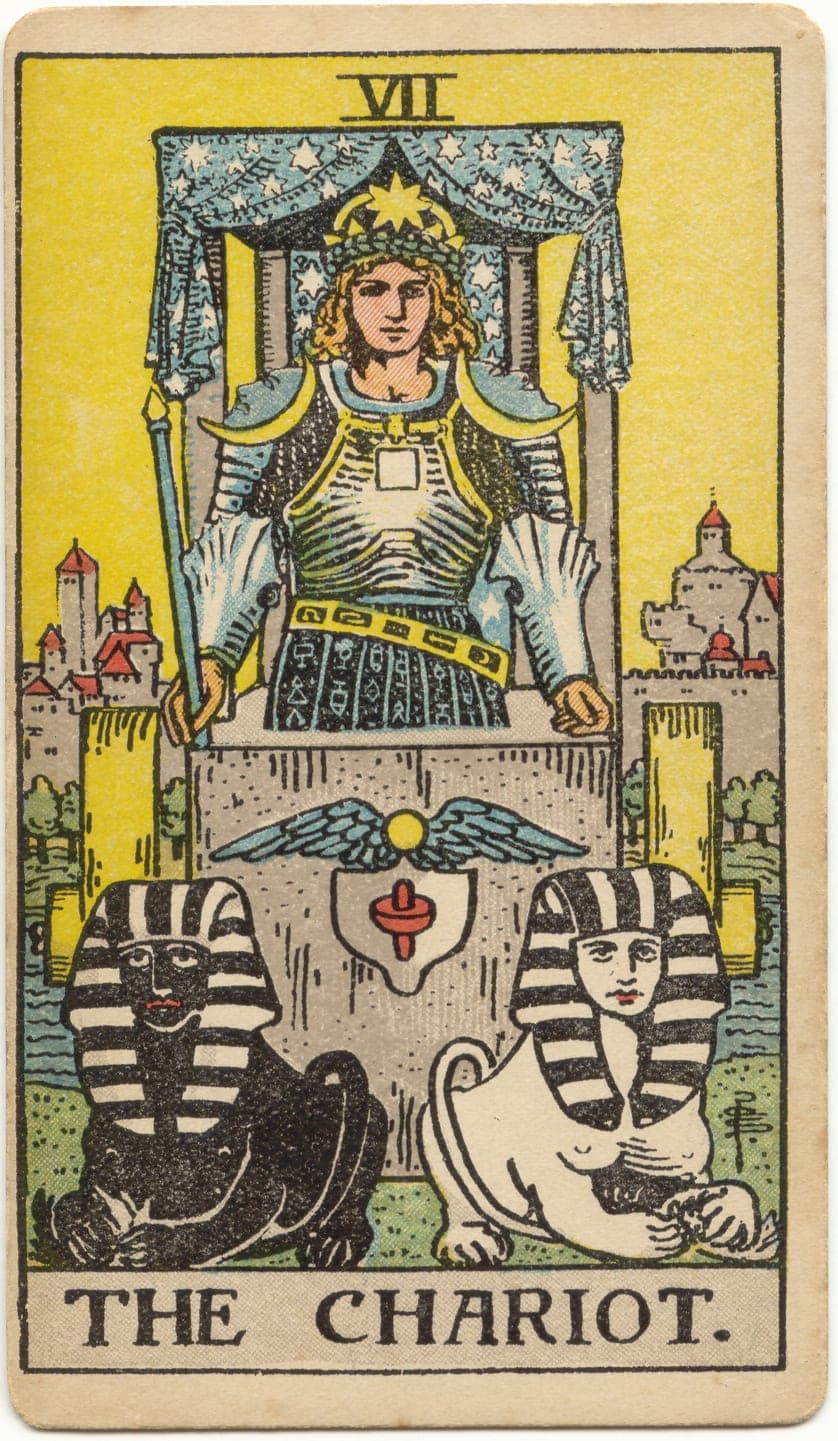
An upright, princely figure stands in his chariot holding a tall scepter. Waite's text mentions a drawn sword, but the 1909 drawing shows a staff. The Urim and Thummim are said to rest on his shoulders. Two sphinxes, one black and one white, sit before the chariot, a detail Waite borrowed from Éliphas Lévi. He presents the charioteer as a king in his hour of triumph rather than a ruler by birth.
Symbolism
Waite sees the charioteer as a conqueror on every level: in thought, in learning, in progress and in some tests of initiation. He has answered the riddle of the sphinx, and above all he stands for a victory won in the mind. Waite is clear about its limits, though. The conquest is outward rather than inward, it may leave him bound by logic alone, and he would have no answer to the questions of the High Priestess.
In a reading
Upright, the Chariot looks at your drive, at the victories you are chasing, and at whether confidence is sliding into presumption. Reversed, it brings quarrels and setbacks to the surface. Which conflicts truly deserve your energy, and which could you let go?