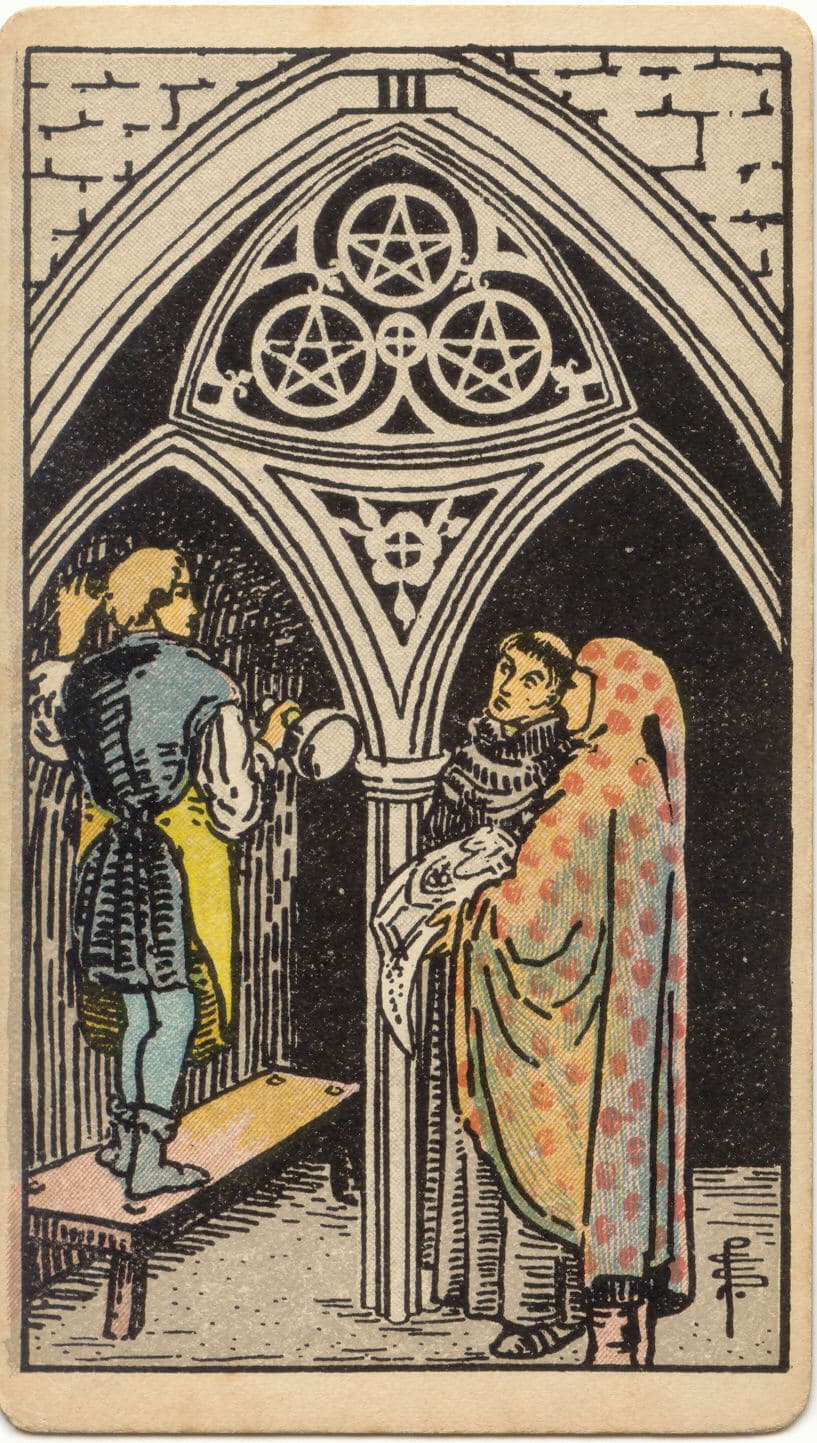
A sculptor works inside a monastery: a card of skilled labor, craft and renown, with mediocrity as its reversed shadow.
Card art by Pamela Colman Smith (1909), public domain
Upright
Yes / No: Yes
The Three of Pentacles stands for a vocation, a trade and work done with real skill. Waite adds that the card was more often read as a sign of nobility, high standing, renown and glory. It is a card about the bond between craft and reputation, and about what committed, practiced work means to you.
craft
trade
skilled work
nobility
renown
glory
Reversed
Yes / No: No
In reverse, craft slips into mediocrity, in work and in other areas of life. Waite also lists childishness, pettiness and weakness. Where has effort become half-hearted, or where might small-mindedness be holding you back? None of this is a verdict on your worth.
mediocrity
childishness
pettiness
weakness
Love & relationships
Upright, the Three of Pentacles describes a relationship built like good craftsmanship: through effort, shared plans and respect for what each person brings. The connection may have grown out of working together, or others may hold it in high regard. Something lasting is built one practiced step at a time.
Reversed, the Three of Pentacles suggests half-hearted effort in a connection, where small grievances, pettiness or immature reactions get in the way of building something together. Commitment may feel lukewarm for now. What is each person contributing? Look at it honestly, without treating the card as a verdict on anyone's worth.
The image
A sculptor is at work inside a monastery. Waite asks readers to compare the card with the Eight of Pentacles, where the young craftsman, an apprentice or amateur, was still learning. Here he has earned his reward and is working in earnest.
Symbolism
Waite treats the two cards as chapters of one story, from learning a craft to practicing it with full commitment. The monastery setting places practical labor inside a religious house, joining skilled work with a life of devotion. Despite the humble scene, Waite reports, the card was usually read as one of nobility, renown and glory rather than plain trade.
In a reading
In the upright position, the Three is about your skills, your trade and the recognition good work can bring. Reversed, it asks whether mediocrity, pettiness or a lack of resolve has crept into your work or into other parts of life.
The yes / no answer is our editorial reading of the card’s overall tone, not a prediction.
For self-reflection and personal insight. Not a prediction and not a substitute for professional medical, legal, financial or mental-health advice.