The image
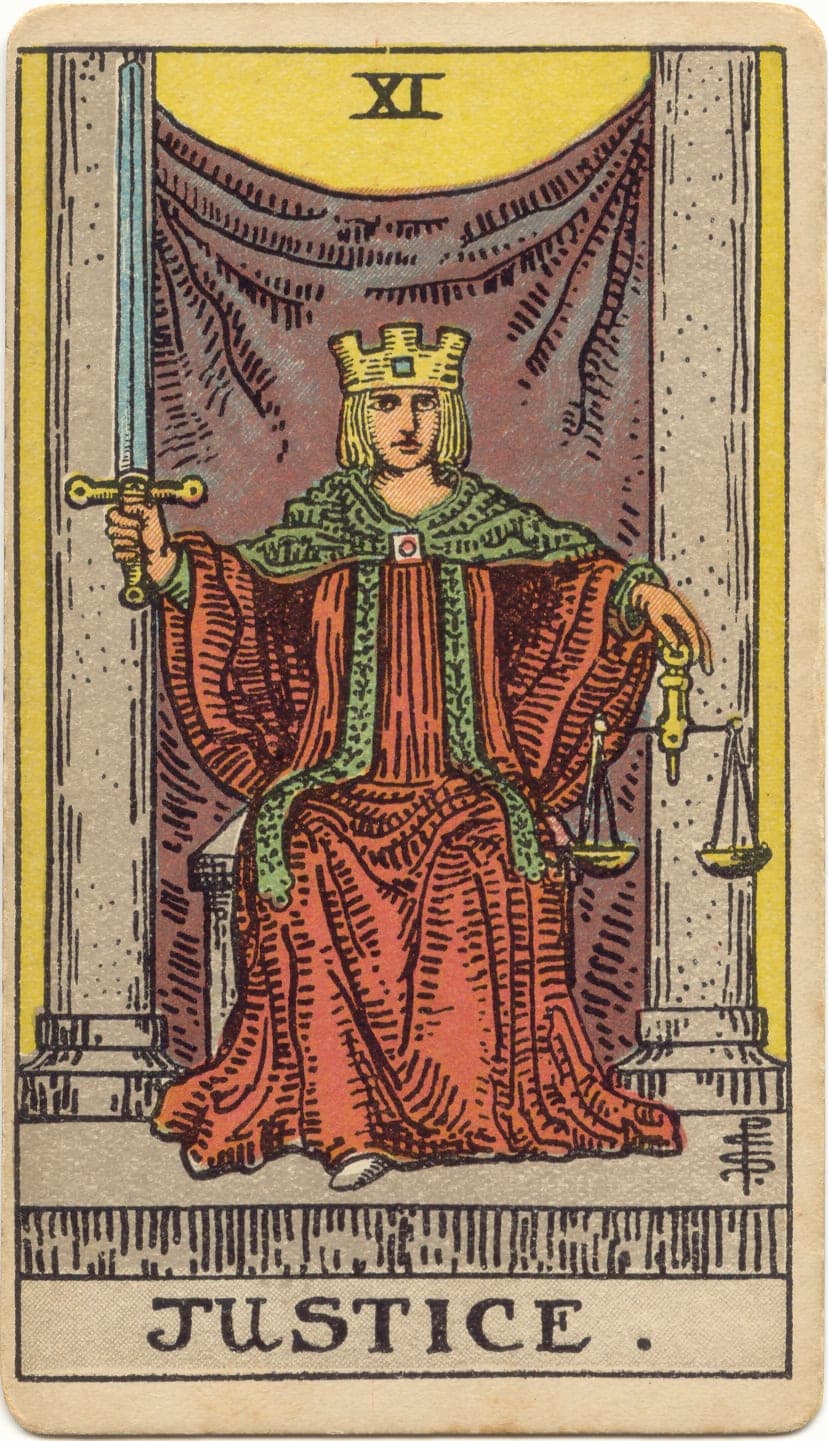
A crowned woman sits between two pillars, holding a raised sword in her right hand and scales in her left. Waite points out that, like the High Priestess, she is seated between pillars. The design, he notes, keeps to the traditional imagery of Justice, and the figure has long been identified with Astraea, the classical goddess of this virtue.
Symbolism
Waite counts Justice among the cardinal virtues that appear in the Major Arcana, and he finds most of its meaning on the surface. The pillars carry his main point. This card stands for the moral law that repays each person according to their deeds, which he distinguishes from a mysterious spiritual election that no rule can explain. Her pillars and those of the High Priestess, he concludes, open onto different worlds.
In a reading
Drawn upright, Justice is a call to weigh the situation honestly and to picture what a fair outcome would look like for everyone involved. Reversed, it draws attention to bias, rigid procedure or excessive harshness that may be distorting the picture, including in how you judge yourself.