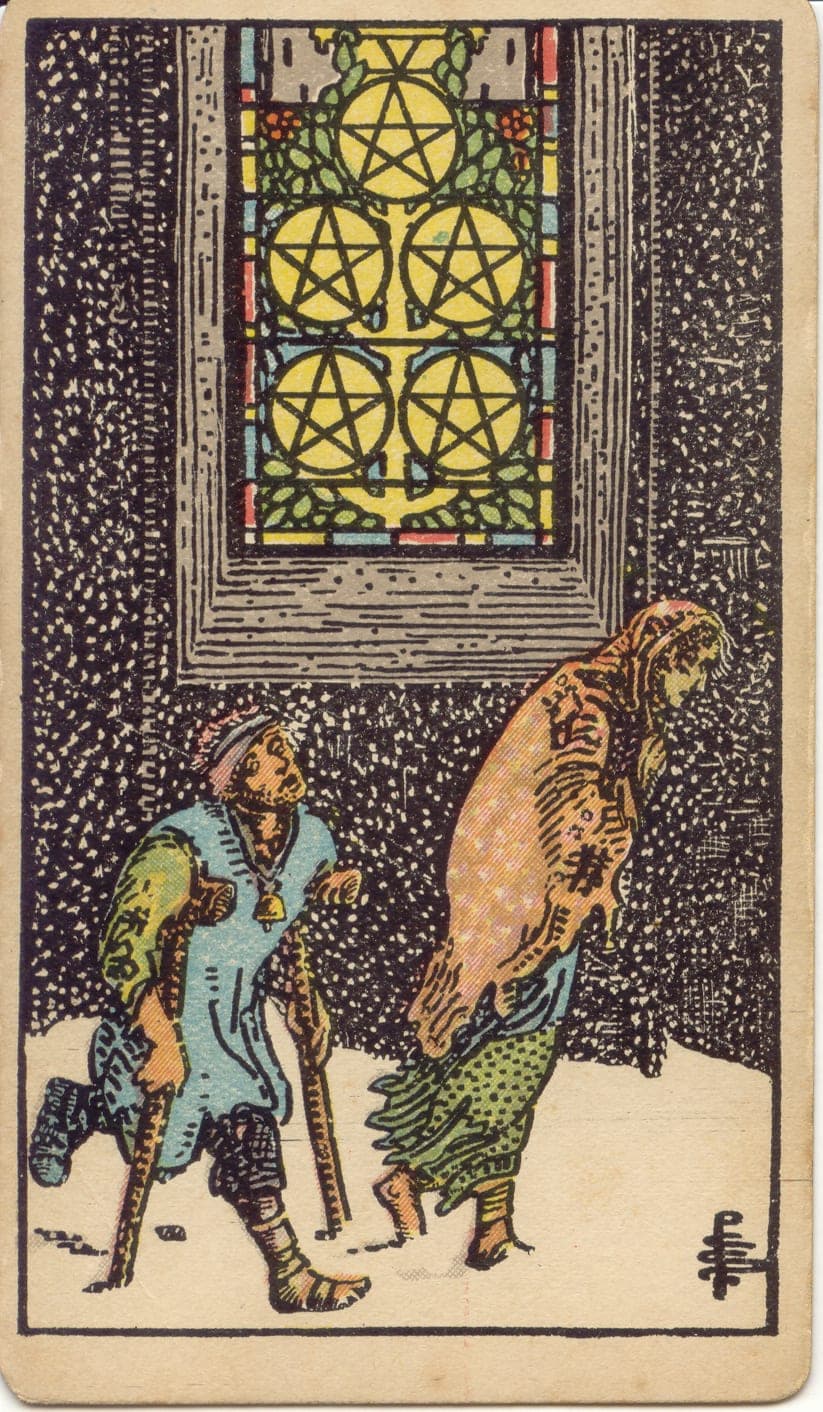
Two beggars pass a lit window in the snow: a card of material hardship, which some older readers took as a card of love.
Card art by Pamela Colman Smith (1909), public domain
Upright
Yes / No: Maybe
The Five of Pentacles is read above all as a sign of material hardship, whether the outright want shown in the picture or difficulty of another kind. Some card readers, Waite notes, saw it instead as a card of love, partners and friends, of harmony and kinship, and he admits that the two views cannot be reconciled. Where do you feel supported?
material hardship
poverty
love and lovers
harmony
close affinities
Reversed
Yes / No: No
Disorder and chaos, ruin and discord between people make up the reversed meaning. Waite also lists profligacy: reckless, wasteful excess. Where things feel scattered or in conflict, restoring a measure of order may be the first step.
disorder
chaos
ruin
discord
reckless excess
Love & relationships
Upright, the Five of Pentacles describes a hard season faced side by side, when outside pressures or a sense of going without test a connection. Some older readings link the card with lovers, companionship and close affinity, so it may also speak of the comfort of not facing hardship alone. Where is support being offered, and where might you ask for it?
Reversed, the Five of Pentacles points to discord and disorder pulling at a bond, whether through arguments, careless excess or a general sense of things coming apart. What feels chaotic between you, and which small steps might restore some order? Outside help or a calm conversation could ease the strain.
The image
Two beggars make their way through a snowstorm, passing a window that glows with light. Waite treats this scene of poverty as the plainest form of the card's meaning, while allowing that hardship can take other forms too.
Symbolism
The snow and the ragged travelers make hardship visible, yet the lit window is right beside them; whether they notice it, the picture leaves open. Waite presents the scene as one example of material trouble rather than the only one, and he notes that the suit as a whole does not deal mainly with money.
In a reading
Upright, the Five looks at hardship and at what helps you through a lean or cold season; some readers take it instead as a card about love and companionship. Reversed, it asks where disorder, conflict or excess may be pulling things apart.
The yes / no answer is our editorial reading of the card’s overall tone, not a prediction.
For self-reflection and personal insight. Not a prediction and not a substitute for professional medical, legal, financial or mental-health advice.